Where Does Your Money Last Longest? A Real Expected Value Breakdown of Every Game Type

Photo by Photo by Amanda Jones on Unsplash on Unsplash
Here's a question most casino players never actually sit down and answer: what does it cost me, per dollar, to play this game?
Not what it feels like. Not what the marketing says. What the math says.
Expected value (EV) and house edge are the two numbers that answer that question honestly. And once you understand them, you'll never look at a casino floor — virtual or physical — the same way again. At CazinoZGoldy, we think informed players are better players, so let's run the actual numbers across every major game type we offer.
The Core Concept: What House Edge Actually Means
House edge is the percentage of each bet the casino expects to keep over the long run. It's not what happens on any single bet — short-term results are all over the place. But over thousands of spins or hands, the house edge is the gravitational pull that shapes your real outcomes.
If a game has a 5% house edge, that means for every $100 you wager (not your starting bankroll — your total action), the casino expects to keep $5. Bet $1,000 in total across a session, and the expected cost of playing is $50. Whether you actually lose $50 is a different question — variance means your real results will swing around that number. But $50 is what the math predicts over time.
Expected value is just the flip side of house edge expressed from the player's perspective. A game with a 2% house edge has an EV of -$0.02 per dollar wagered. Negative EV means you're playing against the math. Almost all casino games are negative EV for the player — that's how casinos stay in business. The question is: how negative?
Slots: High Entertainment, Higher Cost
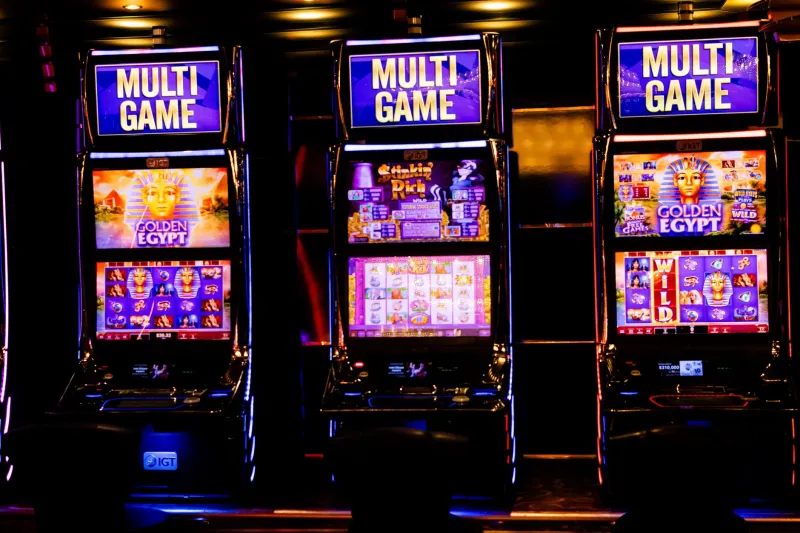
Slots are the most popular game at virtually every online casino, including CazinoZGoldy. They're also, generally speaking, the most expensive games to play in terms of house edge.
Typical online slot house edge: 3% to 10%, depending on the specific game.
High-volatility slots tend to sit at the higher end of that range. Lower-volatility, simpler slot games often run closer to 3-5%. Return-to-player (RTP) percentages — which you'll see listed in game info — are just the inverse of house edge. A slot with 96% RTP has a 4% house edge.
What this means practically: if you're spinning $3 per spin and averaging 400 spins per hour, you're putting $1,200 per hour into action. At a 5% house edge, the expected hourly cost is $60. That's the price of the entertainment — and it's worth knowing.
The upside of slots is variance. Because of how jackpots and bonus features work, short-term swings can be massive in either direction. That's what makes them exciting. Just understand that excitement has a mathematical price tag.
Roulette: Depends Entirely on Which Wheel You're Spinning
Roulette is a case study in why reading the fine print matters.
- American Roulette (double zero): House edge of 5.26%
- European Roulette (single zero): House edge of 2.70%
- French Roulette (single zero + La Partage rule): House edge drops to 1.35% on even-money bets
That gap between American and European roulette isn't trivial. Over a long session, it's the difference between losing roughly $5.26 per $100 wagered versus $2.70. If you're going to play roulette, always choose European or French when available. There's no strategic reason to play American roulette — you're paying nearly double the edge for the same game.
Roulette is also a game with no skill component (outside of bet selection, which affects variance but not the house edge on most bets). What you see is what you get, mathematically.
Blackjack: The Player-Friendly Classic
Blackjack is the game where skillful play genuinely changes the math — and for the better.
Played with basic strategy (the mathematically optimal decision for every possible hand), blackjack's house edge drops to roughly 0.5% or lower, depending on the specific rule set. That's among the lowest edges of any casino game.
The catch: you have to actually use basic strategy. Most recreational players don't, and every deviation from optimal play adds roughly 0.1-0.5% to the house edge per mistake. Players guessing their way through blackjack might be facing a 2-4% edge without realizing it.
Rule variations also matter. Blackjack paying 3:2 (standard) versus 6:5 (player-unfavorable) is a huge difference — the 6:5 version adds roughly 1.4% to the house edge all by itself. Always check the payout on blackjack before sitting down.
Bottom line: blackjack with basic strategy is one of the best statistical bets in the building.
Video Poker: The Hidden Gem
Video poker doesn't always get the attention it deserves, but for players willing to learn, it offers some of the best EV in the casino.
Full-pay Jacks or Better, played with optimal strategy, carries a house edge of just 0.46% — comparable to blackjack. Some variations of Deuces Wild, played perfectly, can actually approach breakeven or slightly positive EV in certain pay table configurations (though these are increasingly rare).
The skill element is real here. Video poker has a defined optimal strategy for every hand, and deviating from it raises your effective house edge. But if you're willing to put in the work to learn the strategy (there are free charts everywhere online), video poker is one of the smartest bets you can make at an online casino.
Sports Betting: EV Depends on You
Sports betting is fundamentally different from casino games because the house edge isn't fixed — it's built into the vig (the sportsbook's commission), and your actual EV depends on how good your predictions are.
The standard sportsbook vig on a straight bet creates an effective house edge of about 4.5% for a bettor who picks winners at random (i.e., 50/50). But here's the thing: sports betting is the one category where skill can genuinely shift the math in your favor. A bettor who consistently identifies mispriced lines and wins 53-55% of spread bets can flip to positive EV.
That's rare. Most recreational bettors are closer to random than they think. But the theoretical possibility of positive EV is what makes sports betting intellectually distinct from purely luck-based casino games.
The Comparison at a Glance
Here's a quick reference for expected house edge across game types:
| Game Type | Approximate House Edge |
|---|---|
| Slots (low RTP) | 8–10% |
| Slots (high RTP) | 3–5% |
| American Roulette | 5.26% |
| European Roulette | 2.70% |
| French Roulette | 1.35% |
| Blackjack (basic strategy) | 0.5% |
| Video Poker (optimal play) | 0.46% |
| Sports Betting (average bettor) | ~4.5% |
What This Actually Means for Your Sessions
Knowing house edge doesn't mean you should only play blackjack and video poker. Plenty of players love slots precisely because of the high variance — the possibility of a life-changing jackpot justifies the steeper edge for them. That's a totally valid choice, as long as it's a conscious one.
What house edge knowledge gives you is clarity. You can size your bets appropriately for the game you're playing. You can set realistic session expectations. And you can stop wondering why the slot that felt so close to paying out didn't — because now you understand what's actually happening under the hood.
At CazinoZGoldy, we believe the best players are the most informed players. Spin big, bet bold — but always know what the numbers are telling you.