Why the Best Casino Players Deliberately Walk Away — Even When They're Winning
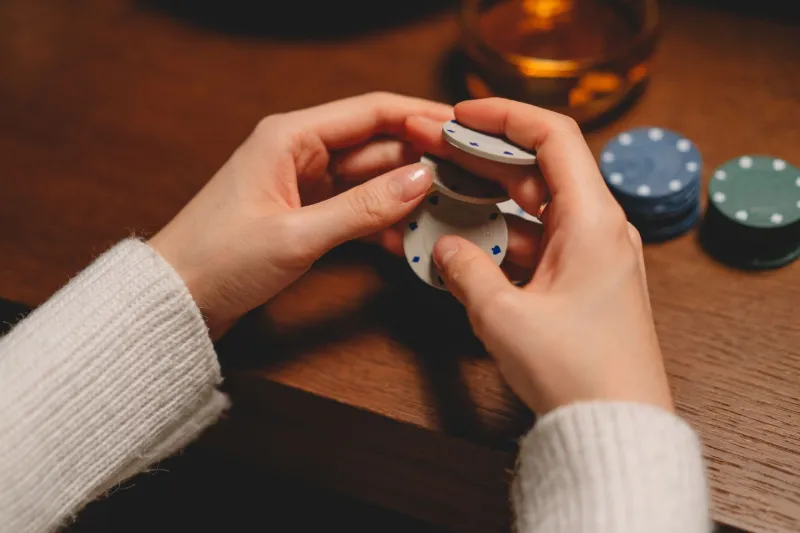
There's a moment every casino player knows. You've had a genuinely good session — maybe you're up $300 on slots, or your sports bets went 4-1 on a Sunday afternoon. Everything feels right. The instinct is to keep going, to ride the momentum, to see how far the wave will carry you.
And that instinct, more often than not, is exactly what sends people home with less than they started.
The most consistently profitable gamblers — the ones who treat this like a long-term practice rather than a series of individual sessions — have learned something that cuts against every natural impulse: after a winning session, the smartest play is often to close the app, step away from the table, and not come back for at least a day or two. Sometimes longer.
They call it a lot of things. Cooling off. Resetting. Some refer to it informally as the "rest-and-protect" approach. Whatever the name, the principle is the same: deliberate downtime is a weapon, not a weakness.
The Greed Spiral Is Real — and It's Wired Into You
Before we get into strategy, let's talk about why this is so hard.
Behavioral economists have spent decades documenting a phenomenon called "house money effect." When people are playing with winnings rather than their original stake, they unconsciously treat that money as less real — as if it somehow belongs to the casino already and losing it back is just returning what was borrowed. This leads to looser, riskier bets, longer sessions, and dramatically higher loss rates.
Layer on top of that something called "hot hand fallacy" — the deeply human belief that a winning streak is evidence of momentum that will continue — and you have a psychological cocktail that's almost purpose-built to drain a casino account.
Winning sessions feel like they should keep going. The brain interprets recent success as a signal, not as random variance. And so players stay. And stay. And eventually, the math catches up.
What a Rest Day Actually Does
Stepping away for 24–72 hours after a significant win accomplishes several things simultaneously.
It locks in your gains. This sounds obvious, but it bears stating plainly: money you don't play with cannot be lost. Every hour you spend away from the casino after a winning session is an hour during which your profits are 100% safe. That's a return on investment no game can match.
It resets your emotional baseline. The elevated state you're in after a big win — excited, confident, maybe a little invincible — is not a good state for making sound betting decisions. Rest days give that feeling time to dissipate, so your next session starts from a neutral, rational position rather than an overconfident one.
It breaks the session mentally. If you play through a win and immediately start losing, your brain registers the entire sequence as a single event. You "won and then lost it back." If you stop, rest, and return later, your brain registers two separate events: a winning session and a later session. The psychological accounting is completely different — and it makes it much easier to stick to your normal bet sizing and bankroll rules.
It prevents compulsive continuation. Many players don't realize they've crossed from intentional play into compulsive play until they look up and it's 2 AM and their profits from three hours ago are long gone. Mandatory rest periods create a structural pause that interrupts that pattern before it starts.
Building the 72-Hour Rule Into Your Practice
So how does this actually work in practice? Here's a framework that serious players use.
Set a win threshold before you start playing. Decide in advance: "If I'm up X dollars or X percent of my starting bankroll, I stop for the session." Having this number locked in before you're emotionally invested makes it far easier to honor.
After hitting that threshold, start a timer. Not a suggestion — an actual timer. Some players use 24 hours; others prefer 48 or 72. The specific number matters less than the commitment to a real, defined pause.
During the rest period, do not review your balance obsessively. Checking your winnings repeatedly during downtime is just a way of keeping yourself psychologically engaged with the casino. Log out. Do something else. Let the distance actually develop.
Return with a fresh session budget. When the rest period ends, don't immediately try to "build on" your previous win by increasing your stakes. Start your next session with your standard bankroll parameters. The previous win is already protected — this is a new, separate event.
When to Extend the Break
Sometimes 72 hours isn't enough. There are specific situations where experienced players extend their rest periods significantly:
- After an unusually large win (anything over 5x your typical session result)
- After a session where you violated your own rules, even if you ended up profitable
- During periods of high personal stress, when emotional decision-making is elevated
- After any session where you chased losses and got lucky — the behavior is the warning sign, not the outcome
The goal is to return to the casino feeling genuinely neutral — neither hungry to chase a previous loss nor overconfident from a recent win. That emotional neutral zone is where the clearest decisions get made.
The Bigger Picture
Here's the reframe that makes this whole strategy click: casino success isn't measured session by session. It's measured over months and years of play. A player who wins $400, protects it with a rest day, and returns fresh is in a fundamentally different position than a player who wins $400 and gives most of it back in the next two hours.
The cumulative effect of consistent rest-and-protect behavior is significant. You capture more of your winning sessions. You reduce the damage from the inevitable cold streaks. And over time, your actual results start to look more like your best sessions and less like your worst ones.
At CazinoZGoldy, the games will always be there. The gold doesn't disappear because you stepped away for a day. The question is whether you'll still have yours when you come back.