Five Ways Beginners Bleed Money at the Tables (And the Exact Fixes)
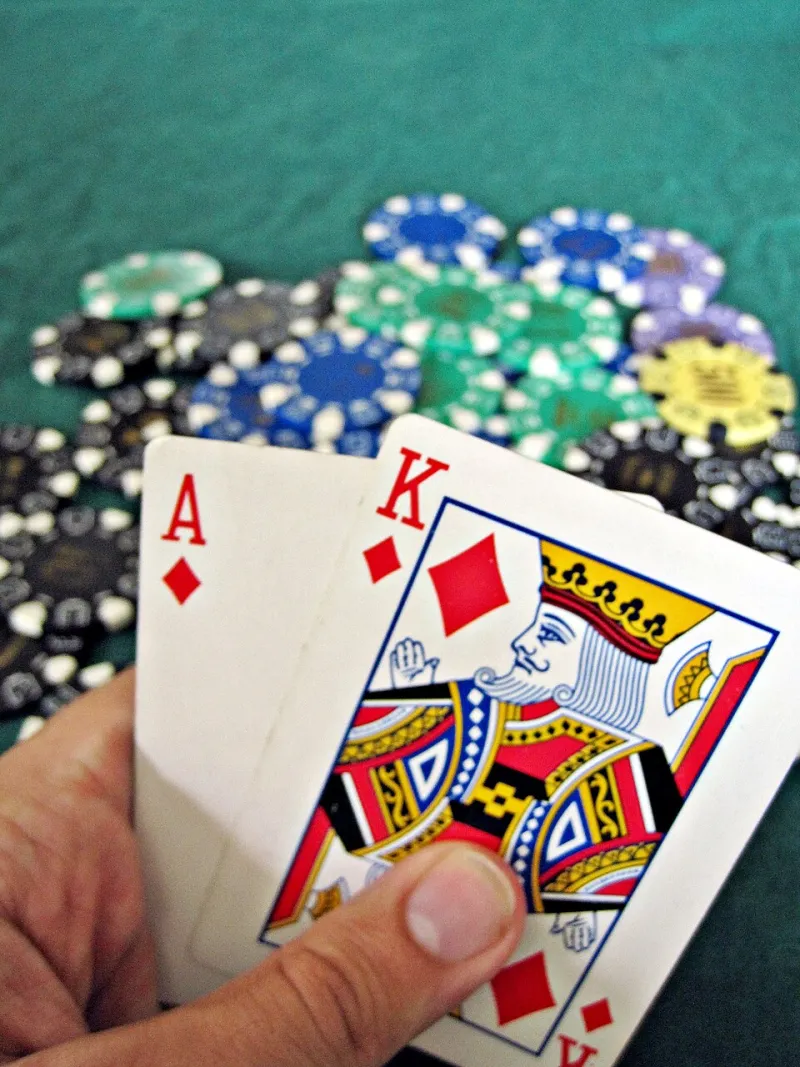
Photo: Images Money, CC BY 2.0, via Wikimedia Commons
Here's a secret the tables don't advertise: for most new players, bad luck is a rounding error. The real damage comes from mistakes — small, repeated, fixable errors that quietly drain your stack hand after hand. We've ranked the five worst offenders by how much they actually cost, with real numbers over 100 hands so you can see the damage in dollars, not vibes.
Mistake #5: Ignoring the Table Minimum (The Slow Leak)
Beginners sit down at a $25 table with a $200 bankroll because the seats were open. Twenty losing hands later — which at blackjack happens regularly — the session is over before the drinks arrive.
The cost: Bankroll math says you want at least 30–40 bets of runway. At a $25 table, your $200 gives you 8. That's not playing; that's a coin flip with chairs.
The fix: Match the table to your stack. A $200 bankroll belongs at $5–$10 tables, full stop. The game is identical; the survival time is tripled.
Mistake #4: Playing Roulette Like the Numbers Have Memory
Red has hit five times in a row, so black is "due." Every experienced player just winced. Roulette wheels have no memory, and the American wheel's double zero means every bet — including the "safe" even-money ones — carries a 5.26% house edge.
The cost: Betting $10 per spin over 100 spins, you're wagering $1,000 with an expected loss of about $53. Chase a phantom pattern with a martingale (doubling after losses) and a bad streak turns that into a table-limit disaster fast.
The fix: If you must play roulette, find a single-zero wheel (2.7% edge) and treat every spin as independent. Because it is.
Mistake #3: Taking Even Money on Blackjack
The dealer shows an ace, you flip over a blackjack, and the dealer offers "even money." Feels safe. Feels smart. It isn't.
Taking even money is the same as taking insurance, and insurance is a bad bet unless you're counting cards. Roughly 31% of the time the dealer has blackjack — meaning you're trading a guaranteed $20 payout (on a $10 bet) for a bet that pays even money only 31% of the time.
The cost: Over 100 blackjacks against a dealer ace, taking even money costs you roughly $35–$40 compared to just taking your chances. The casino offers it because it makes them money. That's the whole pitch.
The fix: Never take even money. Never take insurance. Take the 3:2 and move on.
Mistake #2: Playing Blackjack Like a Hunch Machine
You have a 16 against a dealer's 10. It feels suicidal to hit. So you stand, the dealer flips a 5, and you lose anyway — and you decide hitting was wrong.
Basic strategy exists because the math already settled these arguments. Standing on 16 vs. 10 loses about 54% of the time; hitting loses about 48%. Hitting is the better bad option, and every deviation from basic strategy adds roughly 0.5% or more to the house edge.
The cost: A basic strategy player faces about a 0.5% house edge. A gut-feel player faces 2–4%. On $10 hands over 100 hands, that's the difference between losing ~$5 and losing $20–$40 — every session, forever.
The fix: A basic strategy card costs nothing. Casinos let you use one at the table. There is no excuse.
Mistake #1: Betting the Baccarat "Tie" — The Prettiest Trap on the Floor
Baccarat is the best game on the floor if you bet Banker (about a 1.06% edge after commission). And then, right there on the layout, is the Tie bet paying 8-to-1, sparkling like a jackpot.
It's not a jackpot. It's a 9.5% house edge wearing a tuxedo. Ties hit about 9.5% of the time, and the payout doesn't come close to compensating.
The cost: $10 Tie bets over 100 hands: roughly $95 in expected losses. The same $100 on Banker loses about $10. Same game, same table, ten times the damage — purely from picking the wrong spot on the layout.
The fix: Banker. Every time. It's boring. It's also correct.
The Takeaway
Add it up and these five mistakes can cost a beginner $200+ per 100 hands more than a disciplined player loses at the same tables — on the same games, with the same luck. The dealer doesn't beat you. The deck doesn't beat you. The layout, the hunches, and the "even money" whisper do.
Learn the fixes, and the tables stop being a mystery. They become a math problem — one you're finally solving.