64 Teams, Zero Certainty: Surviving the Beautiful Madness of Betting March Madness
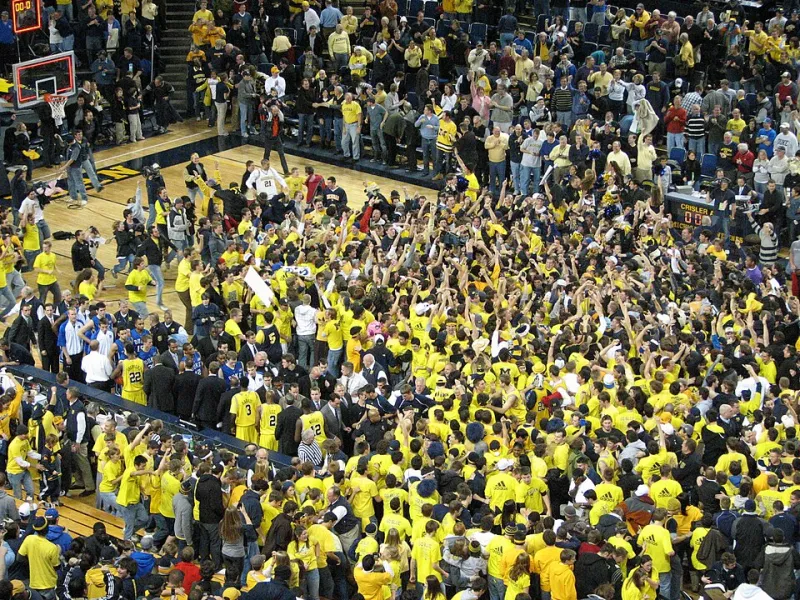
Photo: flickr user gleηη, CC BY-SA 2.0, via Wikimedia Commons
Every March, America does something it does nowhere else: an entire country collectively pretends it can predict the future. Office pools, bracket challenges, sportsbook futures — March Madness is the biggest betting event on the US calendar, and it's also the most gloriously irrational. Sixty-four teams, single elimination, teenagers under maximum pressure. What could go wrong?
Everything, actually. That's the point. But buried inside the chaos are genuine edges — if you know where to look.
Why the Tournament Breaks Normal Betting Logic
During the regular season, sportsbooks are sharp. Markets on Duke versus a mid-major are efficient, priced by professionals who've watched hundreds of hours of film. Then the tournament starts, and two things happen simultaneously: recreational money floods the market, and the sample size collapses to one game.
Recreational money matters because sportsbooks shade their lines toward public bias. The public loves big brands. They'll load up on Kansas, Kentucky, and any 12-seed that made a viral run last year. That bias creates soft spots — lines that are off by a point or two because the book doesn't need to be precise when 80% of tickets are on one side anyway.
The single-game sample matters even more. In a seven-game NBA series, the better team usually wins. In one 40-minute game, a hot-shooting 13-seed can beat anyone. The variance is structural, not accidental.
Where the Soft Odds Actually Live
Early Rounds, Small Names
The first weekend is where the market is thinnest. Books handle hundreds of games in 48 hours, and the matchups between teams nobody scouted deeply — a 9 versus an 8, a 13 versus a 12 — get less attention from oddsmakers. If you follow mid-major conferences all season, you know things the market doesn't. That knowledge is worth more in March than any other month.
The Futures Trap (and the Futures Edge)
Bracket pools and national championship futures are where the dumbest money lives. Everyone picks the 1-seeds to go deep because it feels safe — but everyone else has the same idea, so the payout is microscopic. Meanwhile, the smart bracket play in large pools is contrarian: identify one or two 2- or 3-seeds with favorable paths and load up where the crowd isn't. In a 100-person pool, picking the favorite gets you nothing. Picking a slightly-off path gets you a piece of the prize.
Round-of-32 Line Value
Here's a quiet edge: second-round spreads are often softer than first-round ones. Books are juggling live betting, injuries, and emotional public overreactions to Thursday's upsets. A 5-seed that barely survived gets overpriced as an underdog in round two because the public now "believes" in the 13-seed that won on a buzzer-beater. Belief isn't a stat.
When the Madness Eats Bankrolls Alive
Now the honest part: for most bettors, March Madness is a bankroll shredder, and it's not close.
The volume problem. Forty-plus games in four days. Bettors who normally play two games a Saturday suddenly have opinions on 12 games a day. Volume without edge is just fast-motion losing. If you wouldn't bet a Sun Belt regular season game in February, you have no business having a strong opinion on it in March just because there's a bracket attached.
The parlays. Sportsbooks push March Madness parlays and same-game combos hard because they're massively profitable. A four-team moneyline parlay of favorites looks safe — until one 11-seed plays the game of its life and your ticket burns. The tournament's variance multiplies through every leg.
The sunk-cost bracket. Your Elite Eight is busted by Saturday night, but you keep betting to "get back to even" on your pool entry. That's not strategy; that's tilt with a spreadsheet.
The Playbook for a Sane March
- Cap your exposure. Decide your total tournament budget before the First Four tips. That number is final.
- Bet fewer games than you could. Focus on the matchups you actually know — your conference, your team's region.
- Fade the brand tax. When the public piles onto a blue blood, look hard at the other side.
- Skip the mega-parlays. One well-sized straight bet beats five lottery tickets.
- Enjoy the buzzer-beaters. Seriously. If you're not having fun, you're doing it wrong.
March Madness is the smartest betting window of the year and the dumbest, often in the same afternoon. The bettors who survive it treat it like a marathon with fireworks — respect the distance, enjoy the noise, and never let a 12-seed ruin your April.